From Parlour Games to Pocket Puzzles
Trace the shift from parlour games to pocket puzzles and choose a format that suits your company, setting, available attention, and natural stopping point.
The common mistake with parlour games and pocket puzzles is treating them as the same activity in a smaller package. A game designed around a roomful of people may need conversation, shared attention, and a clear surface; carrying it easily does not remove those demands. The cost is choosing something that cannot settle into the time or setting you have.
Rather than claiming a single historical route from parlour games to pocket puzzles, it is more useful to compare the formats by what they ask of a player. Parlour games such as charades and spoken word games depend on people responding to one another, while a printed word puzzle can be picked up alone and set aside. The contrast helps explain how to choose a pastime for a particular free-time window.
Play around people
Charades needs a person to act, others to watch, and enough room to make gestures visible. A spoken guessing game needs less space, but still relies on people listening and taking turns. In both, the group is part of the game’s equipment.
Cards show why size alone can mislead. A deck is compact, but a particular card game may need several players, a table, and an uninterrupted round. Other card activities can be played alone or on a lap; the rules, not the box, determine the fit.
Group play can accommodate interruptions because players can explain a turn or wait while someone joins the conversation. It may be less suitable where speaking would disturb others, or where the group has no shared interest in playing.
Before packing a social game, check that the people and setting support the way it is played.
Play in a small format
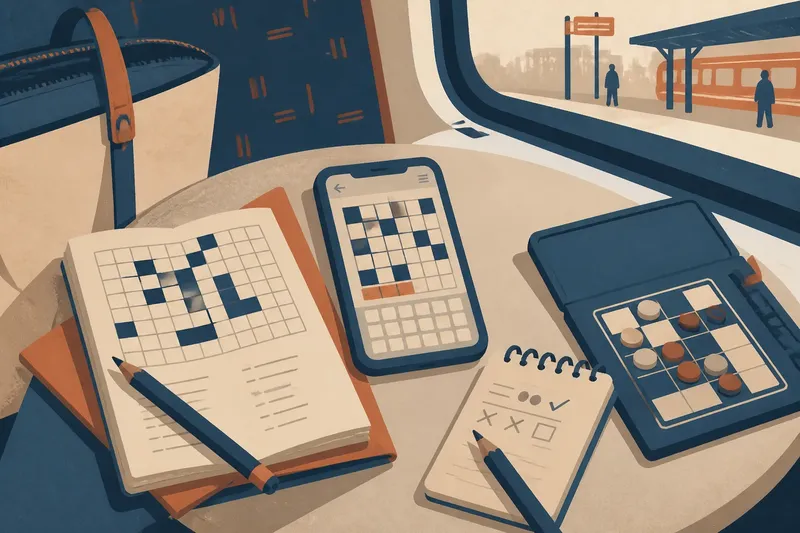
A pocket puzzle changes the demands of play by making the challenge available without a group or large setup. A printed crossword presents clues on a page; a logic grid gives the player a place to record deductions; a sliding-tile puzzle presents pieces to rearrange. These are distinct formats, but each can offer a clear action for one person.
Paper and pencil make it possible to carry a page of problems and record tentative answers. A booklet can preserve your place, while a phone puzzle may save progress if that feature is included. Neither format is automatically convenient: small print can be difficult to read, and a screen may be distracting or hard to see in bright light.
Compactness is only one part of portability. Consider whether you need a flat surface, two free hands, good light, quiet, or a way to remember your progress after an interruption. A puzzle that fits in a pocket may still be a poor choice for a crowded seat.
Choose for the actions the setting allows, not just the size of the game.
Choose by setting
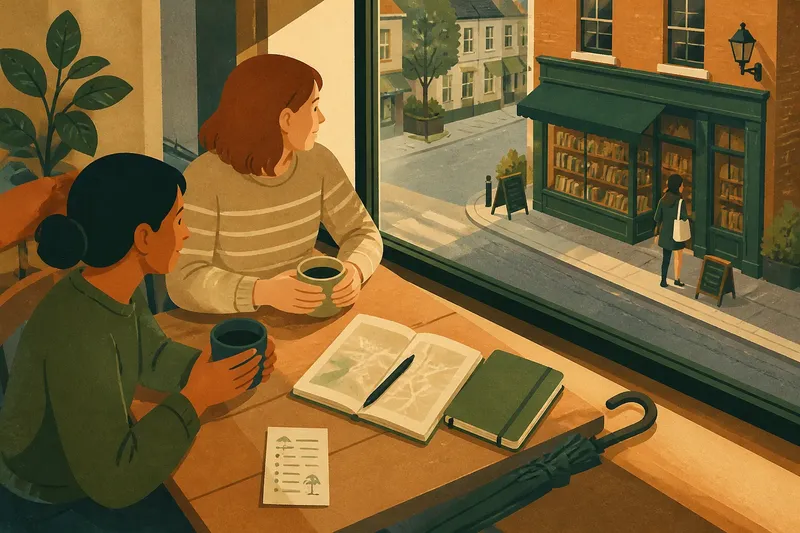
Name the place where you expect to play: a café table, a train seat, a park bench, or a waiting room. Then consider surface space, noise, lighting, and whether you can speak or spread out materials. A café table may support cards but bring conversation; a seat may offer quiet but leave no room for loose pieces.
Say you expect a brief wait in a busy station, with a seat and a phone but no reliable table. You open a word-puzzle app with large text and no writing requirement; you can answer a clue, pause when an announcement comes, and return to the next clue without moving pieces. A magnetic board would require a steady surface, so in this situation it may remain packed rather than being played.
For a shared setting, consider the comfort of other people as well as your own. A quiet puzzle may suit a waiting room, while a spoken guessing game may work better with a willing companion in a place where conversation is appropriate.
When the setting is uncertain, favor a format that can be stopped without losing pieces or disrupting others.
Match time and attention
Some activities have natural stopping points: one clue, one round, or one move. Others build toward a larger solution and can feel unsatisfying if you must leave midway. Pick a stopping point before play begins, especially when your free time may be interrupted.
Attention matters too. A familiar word search may be easy to resume after a call, while a puzzle with several linked conditions may take more effort to reconstruct. Notes, a page marker, or a saved digital state can help preserve your place, if the format offers them.
Imagine you have a booklet with a logic puzzle and a pencil, but expect to be interrupted by calls. You write each confirmed clue beside the grid and mark the next unanswered condition; when you return, those notes show where to continue. If the puzzle offers no easy way to record progress, choose a single-clue activity for that stop-start period instead.
Plan around the attention you are likely to have, rather than the attention you wish the day would leave you.
Which format fits?
Which games work for one person?
Word searches, crosswords, logic grids, sliding puzzles, and solitaire card layouts can all be played alone. Choose according to whether you want vocabulary, deduction, spatial moves, or a familiar sequence of turns.
What works without a table?
A booklet, a phone puzzle, or a spoken riddle can work without a broad surface. If an activity requires loose pieces or a stable arrangement, choose it only when you have somewhere secure to place them.
How can a group play without pieces?
Word association, spoken riddles, and guessing games need no board or cards. Agree on a prompt and a simple turn order so everyone knows when to join in.
Should you choose paper or a phone?
Paper provides a visible page and space for notes, but needs light and a way to keep it steady. A phone is compact and may save progress, but notifications, screen glare, or sound can interfere; choose the format that suits the place.
Pack only what helps
Check the materials before leaving: a deck may need a case, a puzzle booklet may need a pencil, and loose tiles may need a container that closes. If a required item is missing, either add it or choose an activity that does not depend on it.
Keep the kit simple enough to start without a search through your bag. If the game needs several accessories or careful setup, use it in a setting where you can spread out; for a short wait, take a booklet or a self-contained puzzle instead.
For a phone activity, consider whether it is readable in the expected light and usable without sound. If not, select a paper option or another activity better suited to the setting.
Set a stopping point
A clear endpoint can make a short session feel complete. Decide to finish one clue, one round, or a defined turn before starting, rather than forcing a longer activity into a small opening in the day.
For a shared game, agree on the endpoint together. Ending after the current hand or after everyone has taken a turn gives the group a common stopping place; if someone needs to leave earlier, pause only if the rules make it easy to resume.
After playing, notice what the setting made easy or awkward. If pieces were hard to manage, choose a page-based puzzle next time; if playing alone felt isolating, try a spoken game with a companion. Parlour games and pocket puzzles serve different kinds of free time, and the main phrase is useful as a comparison: parlour games to pocket puzzles describes a choice between shared, room-based play and a compact activity suited to a smaller window.
One final practical point: keep the rules close to the materials. A short rule card, marked page, or saved puzzle state can make the next session easier to begin without adding much to what you carry.