Walk, Browse or Sit: Three Ways to Spend an Hour
Walk, browse, or sit for an hour by matching the outing to your energy, company, attention, and weather, so your free time feels restorative rather than rushed.
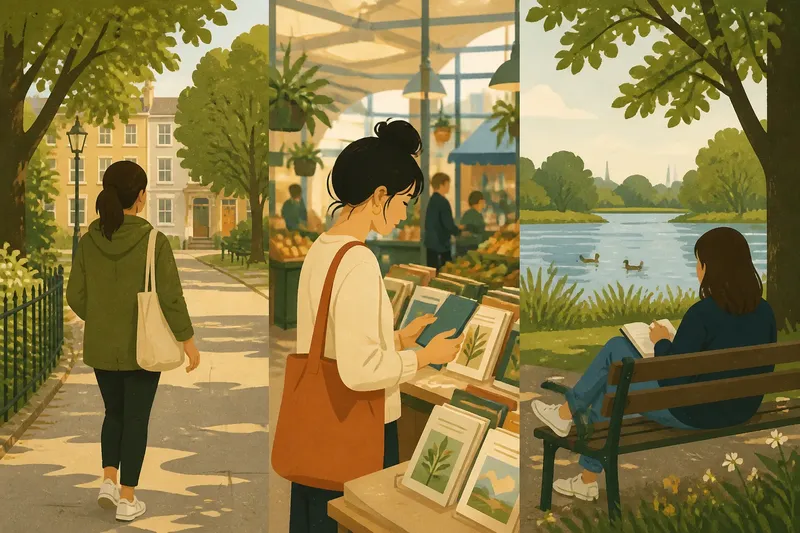
The common mistake in choosing an hour-long pastime is to plan for the activity you think you ought to do, rather than the energy you actually have. A walk, a browse, and a seated pause each ask for something different; the wrong fit can leave you hurried, overstimulated, or still restless afterward.
For a walk, browse, or sit, start with what you want your attention to do. Movement, discovery, and quiet each shape an hour in a different way, and your surroundings can help you choose.
Walking for rhythm
A short walk suits an hour when your attention feels scattered but your body is ready to move. A route provides a simple sequence—turn here, cross there, notice the next block—without requiring a destination to carry the whole outing.
Choose a loop that is easy to shorten or extend, such as a neighborhood block with a pocket park along the way. A loop limits the need to decide where to go at every turn, while a park or tree-lined street offers a point of interest beyond the route itself.
Let the pace fit your purpose. A brisk walk can use restless energy; an unhurried one leaves room to notice window gardens, changing light, or a bakery opening its doors. Trying to do both can make the outing feel like a task with scenery attached.
Company changes the texture, too. Walking side by side often makes conversation easier, since pauses do not require immediate eye contact. If you want quiet, say so before setting out rather than treating silence as a problem.
Ask whether you want movement or a destination. If you want movement, choose a route with a clear return point and an easy way to turn back.
Browsing for discovery
Browsing fits an hour when curiosity is available but sustained physical effort does not appeal. A library, covered market, garden shop, museum lobby, or community art display can offer things to notice without requiring a purchase or a tightly planned itinerary.
Look for a place with an easy entry and a clear way to spend a little time. At a library, you might scan a display table and sit with a magazine; at a market, you might notice seasonal produce and listen to the room. The point is not to inspect everything, but to let one detail lead to another.
Browsing involves reading signs, comparing objects, and making small choices. If your mind is crowded, a quiet garden center or library may feel restful, while a busy market with music and queues may demand more attention than you have to spare.
Keep the visit light by choosing a loose subject rather than a shopping mission. You could look for unusual packaging, local noticeboards, or books with striking cover art. A theme gives your attention somewhere to land without turning the outing into a scorecard.
Say you have an hour before meeting a friend and feel curious but low on energy. You choose the public library, browse the new-arrivals shelf, and read a few pages in a chair near the window; you can expect a quiet pause and a topic to mention afterward, without taking on a long route or a purchase.
Check opening hours and visitor rules before setting out. Follow the venue’s posted guidance on access, photography, and purchases.
Sitting for stillness
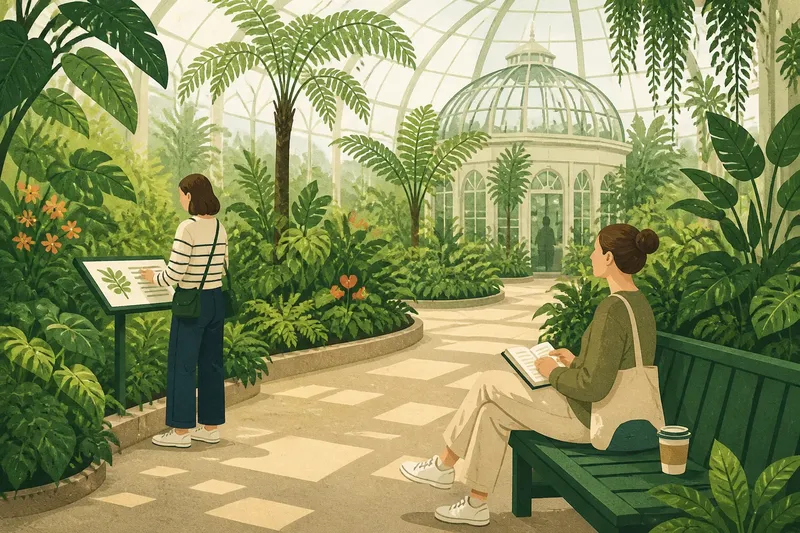
A seated pause is not a failed outing. It suits an hour when you want to be somewhere other than home but do not want movement or a stream of new choices. A bench by a pond, a quiet café corner, a shaded public garden, or a sheltered transit plaza can make stillness feel like an activity in its own right.
Choose a seat for its surroundings. A view of trees or passing people gives your eyes something to follow, while a quieter corner makes reading, sketching, or resting easier. A seat beside a busy doorway may feel lively at first but distracting if you hope to settle.
Bring one small companion activity if it helps: a paperback, a pocket notebook, or a sketchbook. Keep it optional. You can put it away and watch clouds shift, listen to leaves, or let a conversation drift without filling every gap.
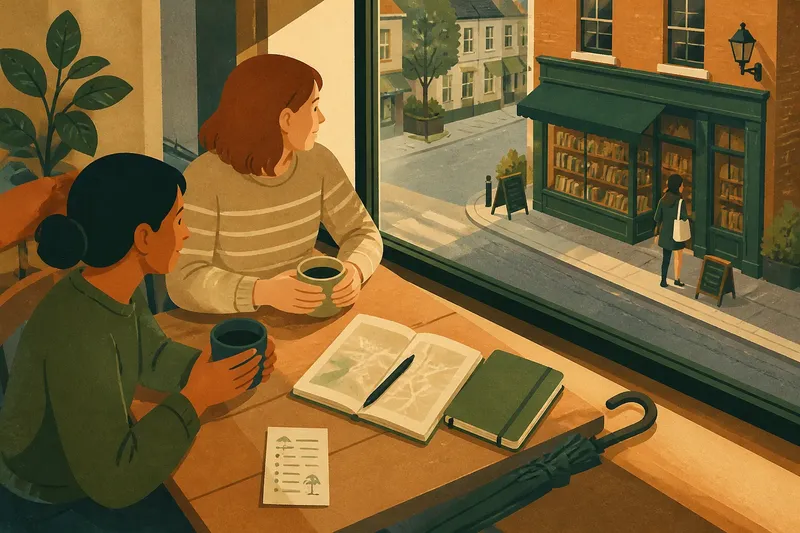
Sitting offers more direct attention than walking. It works for a calm catch-up when both people want to talk, but it can feel awkward if neither has much to say. A shared view or a garden map gives conversation a natural place to rest.
Weather matters more here than on a walk. A breezy bench can send you looking for shelter, while direct sun may make reading uncomfortable. Check for shade, cover, or a nearby indoor alternative before settling in.
Matching the hour?
Which option fits low energy?
Choose a seated pause if you want to be out but need to conserve effort. Browsing can also work if the place is quiet and easy to enter; a walk fits when gentle movement usually helps you feel settled.
What works in uncertain weather?
Indoor browsing offers shelter if the venue is open and welcomes visitors. A walk can suit changeable conditions if there is an easy route back, while sitting calls for a covered spot or a nearby backup location.
Which option suits conversation?
A walk gives conversation room to ebb and flow, while sitting suits a focused catch-up. Browsing can prompt shared discoveries, though a crowded or quiet venue may make talking harder.
Can you combine the choices?
Yes, when the transition is simple and you have enough time. A walk to a library bench or a market browse followed by a rest can work; choose the main activity first so the outing does not become a rushed sequence.
Reading the setting
The three options are not interchangeable, even in the same neighborhood. A riverside path may invite walking, a nearby visitor center may invite browsing, and a bench facing the water may invite sitting; the surroundings shape what your attention naturally does.
Look for practical cues before choosing: a route with safe crossings and a clear return, a public place that welcomes casual visitors, or a seat where you can stay without blocking a path. These details help you relax into the activity instead of monitoring what comes next.
Company and solitude can also guide the choice. If you want to be around people without interacting, a library or market lets you share space at a comfortable distance. For undivided conversation, a quiet path or an uncluttered bench may work better than a crowded browsing space.
When your available time is uncertain, choose an activity with a natural stopping point. You can turn back from a loop, finish browsing after one display, or leave a bench when you feel ready to move. This keeps the outing from depending on a packed schedule.
Choosing by attention
Think of the choices as three ways to direct attention. Walking points it toward movement and surroundings; browsing moves it among objects, signs, and small decisions; sitting lets it rest on a view, a page, or a conversation.
That distinction can be clearer than asking what you “should” do. If you feel mentally busy, a familiar route may reduce decisions. If you are tired of familiar sights, browsing can offer novelty without a demanding excursion. If you have taken in enough, a seat may be the more comfortable use of the hour.
To decide whether to walk, browse, or sit, ask what kind of attention you can comfortably give right now. A good hour need not be active, productive, or memorable in a grand way. It can be a loop around the block, a few minutes with a shelf of books, or a quiet seat before your next obligation.
Let your energy set the scale and the setting shape the details. A small, well-matched outing can make free time feel like time you chose for yourself.